WELCOME TO InPhoSpec 2026!

Integrated Photonics Spectroscopy Summer School

We are delighted to invite you to the 2026 Summer School on Integrated Photonics Spectroscopy, taking place in Galway, Ireland. This four-day school will bring together early-career researchers and leading experts to explore the rapidly evolving landscape of integrated photonic technologies and their application to advanced spectroscopic sensing. Participants can expect a rich programme of lectures, discussions, and networking opportunities spanning topics such as photonic integrated circuits, metasurfaces, mid-infrared sensing, photonics packaging, and optical spectroscopy techniques.

This year’s Summer School will be held at the

University of Galway, Ireland

on

4th - 7th August 2026

Set against the stunning scenery of the west of Ireland, with Galway’s wild Atlantic coastline, sweeping Connemara landscapes, and vibrant city culture providing an inspiring backdrop, the school offers an exceptional environment for learning, collaboration, and the forging of new scientific connections. The event is organised as part of the PROTEMIC project, a Marie Skłodowska-Curie Actions Doctoral Network funded under the EU’s Horizon Europe programme, and welcomes participants both from within the network and from the broader research community.

Registration

Registration is now open!

Full registration includes on-campus accommodation in the Dunlin Village residence – your own en-suite room in a 4 or 6 bedroom self-catering apartment, with shared kitchen and living area. The registration fee also includes: lunch and teas/coffees for 4 days (Tues/Wed/Thurs/Fri); Drinks Reception on Monday evening; Event Dinner on Wednesday evening; Excursion on Wednesday afternoon; refreshments at the Poster session on Tues.

Self-host registration includes everything in Full Registration except that no accommodation is provided. Choose this if you prefer to make your own hotel arrangements. Please note that, in this case, the organisers cannot make hotel bookings for you; a non-exhaustive list of suggested hotels is provided below for convenience, but this should not be considered an endorsement of any particular hotel, and no special rates have been arranged with any of them.

One-day registration allows attendance for one day only. It includes lunch and tea/coffee on that day, but it does not include any accommodation, nor does it include the Excursion or Event Dinner.

N.B. For PROTEMIC Doctoral Candidates: It is not necessary for PROTEMIC DCs to register through the link below. Instead, please complete the form circulated separately.

Full Registration: €650

Self-Host Registration: €370

One-Day Registration: €180

Registration is managed through the MTU Events booking website:

Accompanying Persons: If you plan to travel with accompanying persons (e.g. spouse, children), we will do our best to assist where possible. E.g. it may be possible to book an entire 4- or 6-room apartment for your family (subject to availability and additional cost). They are also welcome to join the excursion and/or event dinner, depending on capacity. If you wish to make arrangements for accompaying persons, please email inphospec@protemic.eu

Venue

Summer School Location

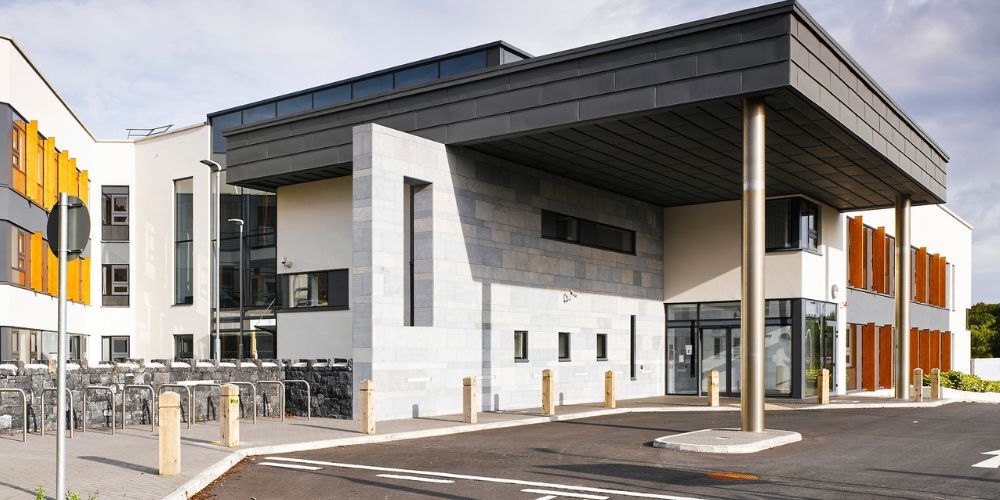
The venue for the Summer School is the Institute for Lifecourse & Society (ILAS) Building on the campus of University of Galway, conveniently situated on the outskirts of Galway city.

Institute for Lifecourse & Society Building

Address: Institute for Lifecourse and Society, University of Galway, Upper Newcastle Road, Galway, Ireland (H91 C7DK) 

GPS Coordinates: 53.288798695904724, -9.069750333089507

University of Galway have an interactive Campus Map for navigating the campus:

UoG Interactive Campus Map

Most of the InPhoSpec talks will take place in Room G006 of the ILAS Building (follow onsite signage).

However, note that the Thursday afternoon session (14:00 – 18:20, 6th August) will be a joint session with BIGSS (Biophotonics and Imaging Graduate Summer School). In order to accommodate the increased audience,

Thursday afternoon’s session will take place in the Joseph Larmor Lecture Theatre, Level 1, Arts/Science Building

See the interactive map above for directions. Note, this location is ~20mins walk from the ILAS Building.

On-Campus Accommodation - Dunlin Village

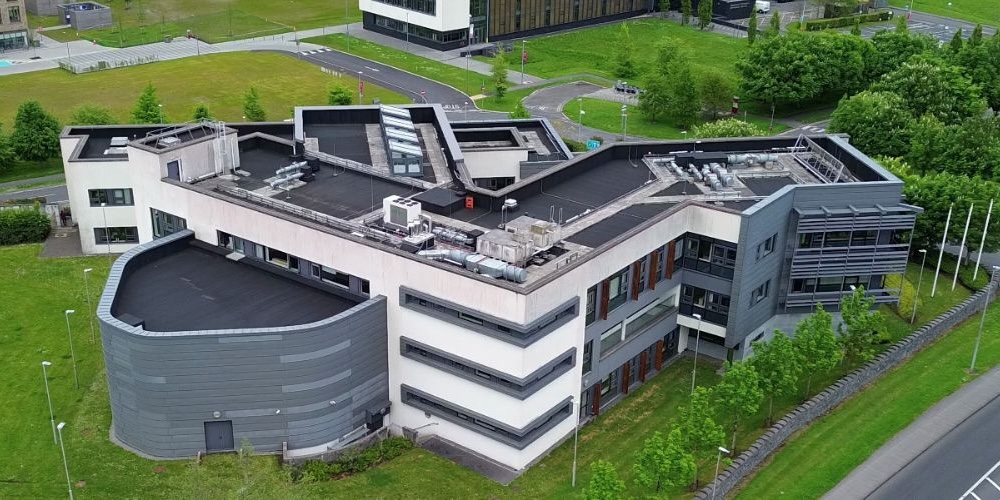
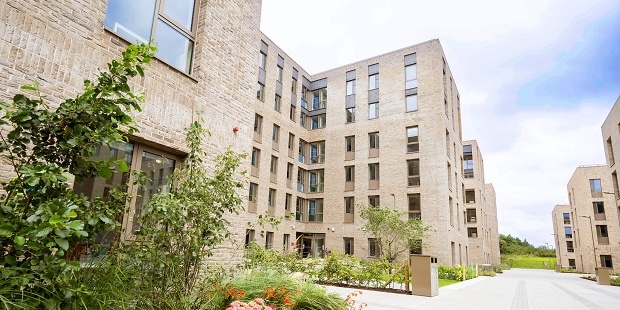
On-campus accommodation provided for the Summer School will be in the Dunlin Village residence, a new residence which opened in September 2023. The residence is conveniently located opposite the event venue.

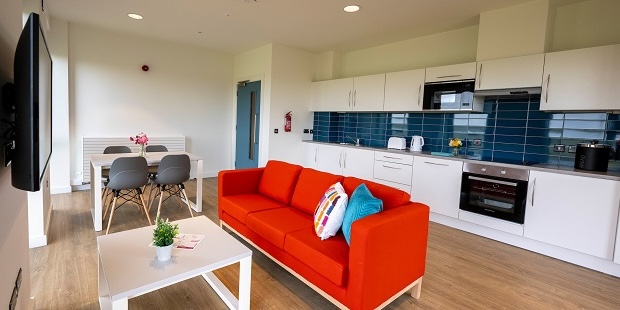
Dunlin Village is a bright, modern, energy-efficient residence with 674 bedrooms in 125 spacious, self-catering, apartments. Apartments contain 4 or 6 individual
bedrooms along with a spacious shared kitchen and living area. Each bedroom comes with its own en suite bathroom, ample storage, and a work desk.

Dunlin Village interior

Address: Dunlin Village, Upper Newcastle, Galway (H91 DFD0)

GPS Coordinates: 53.28984612659994, -9.069301744177094

Getting Here
The nearest airport is Shannon Airport, about an hour’s drive from Galway. Dublin Airport is about 2 hours 15 mins drive. There are a number of bus services linking Galway to other Irish cities; see Bus Éireann (public), or private operators such as CityLink. The train station in Galway is located near Eyre Square in the city centre (about a 15-30min drive to ILAS, depending on traffic). Regular trains from Dublin take about 2.5 hours. The train from Cork requires changing at Limerick (or Dublin), and can take 4-5 hours total. See Irish Rail for timetables. Some further details on how to get to the ILAS Building are available here. For navigating around the campus, the University has an interactive Campus Map – search for ‘ILAS’.
Parking
Be aware that parking around campus is very restricted, with clamping strictly enforced. Most parking spots are for permit holders only. The conference organisers will have a limited number of permits available for Summer School attendees – if you require one of these, please contact inphospec@protemic.eu to make a request. Even if you have a permit, this only allows you to park in certain designated spaces – please ensure you are correctly parked! There is a Park & Ride car park very close to the venue; again, most spaces are for permit holders only, but there are a limited number of Pay & Display spaces.

If you prefer not to avail of the on-campus accommodation, and choose the ‘Self-Hosting’ registration option instead, then you are responsible for arranging your own accommodation. For convenience, we provide here a non-exhaustive list of some nearby hotels. However, please note that the organisers are not able to book hotels for you, and there are no special rates negotiated with any of the hotels. The list below does not imply endorsement by the organisers of any particular hotel.   

Menlo Park HotelHeadford Road, Galway. Tel: +353 91 761 122

The Dean Galway, Prospect Hill, Galway. Tel: +353 91 749 200

Leonardo Hotel Galway, Quay Street, Galway. Tel: +353 91 566 444

Galway Bay Hotel, Salthill, Galway. Tel: +353 91 514 644

The Western Hotel, Prospect Hill, Galway. Tel: +353 91 562 834

Excursion to Connemara – Wednesday, 5th August

Join us for a fantastic day trip from the University of Galway to the stunning Connemara region!

We will depart from the University of Galway at 2:00 p.m. sharp, so please arrive a little early to ensure we leave on time.

Our first destination will be Connemara National Park, with stops at a few scenic sights along the way to take in the breathtaking landscape. In the evening, we’ll head to the beautiful town of Clifden for dinner, live music, and plenty of craic before making our way back to the University of Galway later that night.

We look forward to a great day exploring one of Ireland’s most beautiful regions.

Programme

N.B. At this time, the programme is not yet fully finalised. Speakers, timings and talk titles may be subject to change.

Click on the Speaker’s name for a brief bio (where provided).

Monday 3rd August 2026


19:30 – 21:00: Early Registration and Drinks Reception


08:30 – 09:00: Registration

09:00 – 10:00

Goran Mashanovich
University of Southampton

Mid-IR Silicon Photonics for Healthcare and Environmental Sensors

Goran Mashanovich is a Professor of Group IV Photonics at the Optoelectronics Research Centre (ORC), University of Southampton, UK. He received Dipl. Ing. and MSc in Optoelectronics from the University of Belgrade, Serbia, and PhD in Silicon Photonics from the University of Surrey, UK. He is head of the ORC Mid-IR Silicon Photonics Group. Prof. Mashanovich is author of 500 publications in the field of Silicon Photonics. He is a visiting professor at the University of Belgrade and Paris Saclay.
 

10:00 – 11:00

Peter O’Brien
Tyndall National Institute

11:00 – 11:15: Coffee break

11:15 – 12:15

Fatima Gunning
Tyndall National Institute

12:15 – 13:15

Frederic Gardes
University of Southampton

13:15 – 14:00: Lunch

14:00 – 15:00

Brian Corbett
Tyndall National Institute

Providing the light for silicon photonics

Brian Corbett has worked on the design, fabrication and testing of photonic devices for over 35 years. These devices are used in communications, sensing and data storage covering wavelengths from the infrared to the ultraviolet. Since the turn of the century the emphasis has been on the heterogeneous integration of different materials and devices. Powerful photonic integrated circuits are being enabled by combining devices on a common waveguiding platform.

15:00 – 16:00

Richard Pitwon
Resolute Photonics

Advances in integrated photonics throughout the AI eco-system

Dr Richard Pitwon is a director, scientist and engineer with more than 25 years expertise in optical and photonic interconnect, integration and architectures for hyperscale data centre, HPC, quantum, space and IoT data-communications applications. He holds 57 patents, has authored over 70 publications and is a Fellow of the IET (FIET), Fellow of the Institute of Physics (FInstP) and Chartered Engineer (CEng).

16:00 – 16:20: Coffee break

16:20 – 17:20

Laurent Cerutti
University of Montpellier 

MIR lasers on Si and their photonic integration potential

Dr. Laurent Cerutti is an Associate Professor at the University of Montpellier, France since 2006. His research focuses on the design and molecular beam epitaxy growth of Sb-based photonic devices. He is mainly involved in the development of interband and quantum cascade lasers, as well as lasers grown on silicon. He is the author or co-author of approximately 130 publications in peer-reviewed journals, 4 book chapters, and is a co-editor of a book on mid-infrared optoelectronics.


17:20 – 18:30: POSTER SESSION with Refreshments

The Poster Session is generously sponsored by:

09:00 – 10:00

Geert Van Steenberge
Ghent University/IMEC

[TBC]

10:00 – 11:00

Klaus Gerwert
betaSENSE GmbH / Ruhr University Bochum

11:00 – 11:15: Coffee break

11:15 – 12:15

Padraic Morrissey
Tyndall National Institute / UCC

An Introduction to Photonics Packaging Technologies

Dr. Padraic Morrissey is a Senior Technology Programme Manager at the Tyndall National Institute in Cork. His work focuses on photonic integrated circuits, advanced packaging, and translating photonic technologies into real-world applications. He has contributed to major European research and innovation projects, developing advanced photonic packaging technologies for healthcare, sensing, and communications applications.

12:15 – 13:15

Amol Delmade
Pilot Photonics

Photonics Integrated Frequency Combs for Telecommunication & Sensing

Dr. Amol is a senior photonics engineer and product strategist with Plot Photonics. He has 8+ years experience in tackling various challenges focused in optical communication. He received PhD from DCU in 2022 and has published >40 papers with >510 citations. Currently, he has been focused on increasing the market readiness of products and performing system validation. Dr. Amol was recently included in the Photonics 100 list for 2026 by Electro-Optics. He is a class of 2026 OPTICA Ambassador.
 

13:15 – 14:00: Lunch


14:00 – 21:00: Excursion including Event Dinner


09:00 – 10:00

Dean Venables
University College Cork

Cheaper and simpler? Spectroscopic instruments based on broadband sources for mobile and remote observations of the atmosphere

Dean Venables (PhD, Yale University) is a senior lecturer in chemistry at University College Cork. His research focuses on developing spectroscopic instruments to quantify atmospheric trace gases, and his work has advanced the use of broadband optical cavities in the visible and ultraviolet. He is an editor of a monograph on spectroscopic monitoring of the atmosphere and a co-convener of a session on spectroscopic techniques at the EGU Annual Assembly. His work has been cited almost 3,000 times.

10:00 – 11:00

Andrea di Falco
University of St Andrews

11:00 – 11:15: Coffee break

11:15 – 12:15

Conor Russell
Tyndall National Institute

An Introduction to Distributed Optical Fibre Sensing

Conor Russell is pursuing a PhD in distributed fibre sensing integration in optical communication networks. He is a member of the Photonics Systems Group at Tyndall National Institute, under the supervision of Dr. Cleitus Antony and Prof. Paul Townsend.
Conor received a bachelor’s degree in Electrical and Electronic Engineering from University College Cork (UCC) in 2019. In 2021, he obtained a master’s degree in Photonics Engineering from the Technical University of Denmark (DTU).

12:15 – 13:15

Izabela Naydenova
Technological University Dublin

13:15 – 14:00: Lunch

Thursday afternoon is a Joint Session with BIGSS (Biophotonics and Imaging Graduate Summer School)

 N.B. Note the location change: This session will be held in the Joseph Larmor Lecture Theatre 

14:00 – 16:00


Jana Kainerstorfer
Carnegie Mellon University 


Diffuse Optical Spectroscopy in Deep Tissue and the Brain

Jana Kainerstorfer is a Professor at Carnegie Mellon University. Her lab is focused on developing diffuse optical imaging methods for monitoring and assessing cerebral health, fetal health, as well as brain imaging in marine mammals. She serves as Conference Chair for the Photonics West: Clinical and Translational Neurophotonics conference, is an associate editor for Journal of Biomedical Optics (SPIE), a senior member of OPTICA, and Fellow of SPIE and AIMBE.


16:00 – 16:20: Coffee break

16:20 – 17:20

Katherina Hemmen
Rudolf-Virchow-Center for Integrative and Translational Bioimaging, Julius-Maximilians University Würzburg

Seeing Molecules in Action: Multiparameter Fluorescence Spectroscopy from In Vitro Single Molecules to Live Cells

Dr. Katherina Hemmen is a Senior Scientist at the Core Unit Fluorescence Imaging of the Rudolf Virchow Center (Julius-Maximilian University Würzburg). Her PhD focused on single-molecule fluorescence spectroscopy, giving her strong expertise in FRET, time-resolved fluorescence, and fluorescence anisotropy. She develops fluorescence lifetime imaging and spectroscopy approaches in live cells to study membrane receptor dynamics and protein interactions for integrative dynamic structural biology.

17:20 – 18:20

Alan Ryder
Nanoscale Biophotonics Laboratory, University of Galway

APIES (Absorbance, Polarized Intrinsic Emission, and Light Scattering): Simultaneous Protein Aggregation, Concentration, and Stability Analysis for macromolecules.

Prof Ryder has a B.Sc. (1989) and Ph.D. in chemistry (1994) both from the University of Galway (UoG). After a postdoctoral researcher in chemistry at UCC, he joined the National Centre for Laser Applications in UoG 1997 to work on developing quantitative Raman spectroscopy for measuring illicit narcotics. In 2003 he formed the Nanoscale Biophotonics Laboratory which advances the use of Fluorescence and Raman spectroscopies for industrial, life and physical science applications.


09:00 – 14:00: PROTEMIC Project Meeting
For members of the PROTEMIC Network only


Posters

All student attendees will be expected to present a poster at the Poster Session on Tues 4th August. Posters should be prepared in A0 Portrait size; other than that, you may use your own template, but please include the InPhoSpec2026 logo (download here).

PLEASE NOTE: There will be no facilities for printing posters at the venue. Attendees should print their posters themselves and bring them with them. Poster boards and velcro strips for attaching posters will be provided.

There will be awards for the Best Poster presentation:

Best Poster Prize: €250

Runner-Up Prize: €100


The Poster Session is generously sponsored by:

Contact

InPhoSpec 2026 is organised by the Centre for Advanced Photonics & Process Analysis (CAPPA) at

Munster Technological University

To contact the organisers, please use the email address:

InPhoSpec 2026 is organised in conjunction with the PROTEMIC Doctoral Network.  PROTEMIC – Integrated Spectroscopy for Protein Analysis Using Metasurfaces and Interband/Quantum Cascade Devices – is a Marie Skłodowska-Curie Action which is funded by the European Union’s Horizon Europe programme. It is a Double Doctorate programme involving 10 partners across Ireland, Germany, Austria, Spain and Switzerland, which trains 12 Doctoral Candidates (DCs) in a cross-disciplinary network combining photonics integration and advanced spectroscopy to demonstrate a new paradigm of in-situ measurements of protein denaturation. Find out more at www.protemic.eu.

Banner image credit: Prof. Chaosheng Zhang